BloomChat

Client Type
Managed IT services provider
Engagement Length
9 months
Operating Focus
AI across client operations
Last Updated
June 22, 2026
MSP to client network
Platform reach

Built with an IT managed services provider and expanded into client environments across LA, Orange County, and out-of-state markets.

1,000+ workflows
Automation scale

Across onboarded client use cases, BloomChat supported automations for reporting, proposals, lookup, intake, and operational follow-up.

Scattered to actionable
Executive visibility

Executives moved from fragmented client and workflow data toward account-level context they could use before decisions.

Proposal work accelerated
Revenue readiness

Teams could identify service needs and proposal opportunities earlier, with account history and prior work already assembled.

Overview

How BloomChat became an AI-on-enterprise platform for mid-market companies

BloomChat account intelligence interface showing unified client context

BloomChat began as an AI-on-enterprise platform for an IT managed services provider. The CEO led the design and scope. Meru led the core development. Together, we built a platform the provider could sell and deploy into its mid-market client network.

The work expanded from one company's internal AI need into a repeatable implementation motion across onboarded clients. BloomChat supported account intelligence, reporting, proposal workflows, knowledge lookup, and automation systems across dozens of industries.

Project contextPublic detail
Client profileManaged IT services provider and client network, anonymized under NDA
Engagement lengthNine-month engagement; scope and duration vary by operational complexity
Distribution pathBuilt with the MSP and expanded into onboarded client environments
Client market200+ potential client companies across LA, Orange County, and out-of-state markets
Automation scale1,000+ automations across dozens of mid-market industries
System scale100,000+ historical tickets, CRM records, proposals, emails, and wiki entries connected to workflow and account lookup
Private dataClient identity, account records, routes, and sensitive operational details withheld

What changed after BloomChat became a platform?

AI moved from internal tool to client platform

Before: the MSP had client demand for AI but no repeatable platform to sell and deploy. After: BloomChat became the foundation for AI implementations across onboarded client environments.

Automations scaled across companies

The platform supported 1,000+ automations across reporting, proposals, lookup, intake, follow-up, and operational workflows for mid-market clients.

Executive workflows became visible

Executives and operators could move from scattered client and workflow data toward account-level context they could use before support, renewal, and revenue decisions.

Proposal work became timely

Before: proposal work could take weeks because teams had to rebuild account history. After: qualified first drafts could be prepared while opportunities were still current.

Mid-market AI implementation matured

BloomChat became the first serious proving ground for Meru's approach to AI implementation beyond novelty chatbots and vanity metrics.

The Drift

What made client decisions slower?

The provider saw the same pattern across its client base: mid-market companies wanted AI, but most of them did not have clean data, clear workflows, or a practical implementation path. They did not need a novelty chatbot. They needed AI connected to the work that already ran the business.

That made BloomChat larger than a single internal tool. It became the platform layer for bringing AI into client operations: reports, proposals, customer context, internal knowledge, intake, follow-up, and executive decision support.

What made the platform useful to client companies?

The useful layer was not "AI" in the abstract. It was AI attached to specific workflows that executives cared about: service visibility, proposal creation, account history, reporting, and operational follow-up.

Each client environment had different systems and constraints, so the platform had to be flexible. Some implementations centered on account intelligence. Others centered on automation, reporting, proposal generation, or executive visibility.

The System

What did BloomChat connect across client environments?

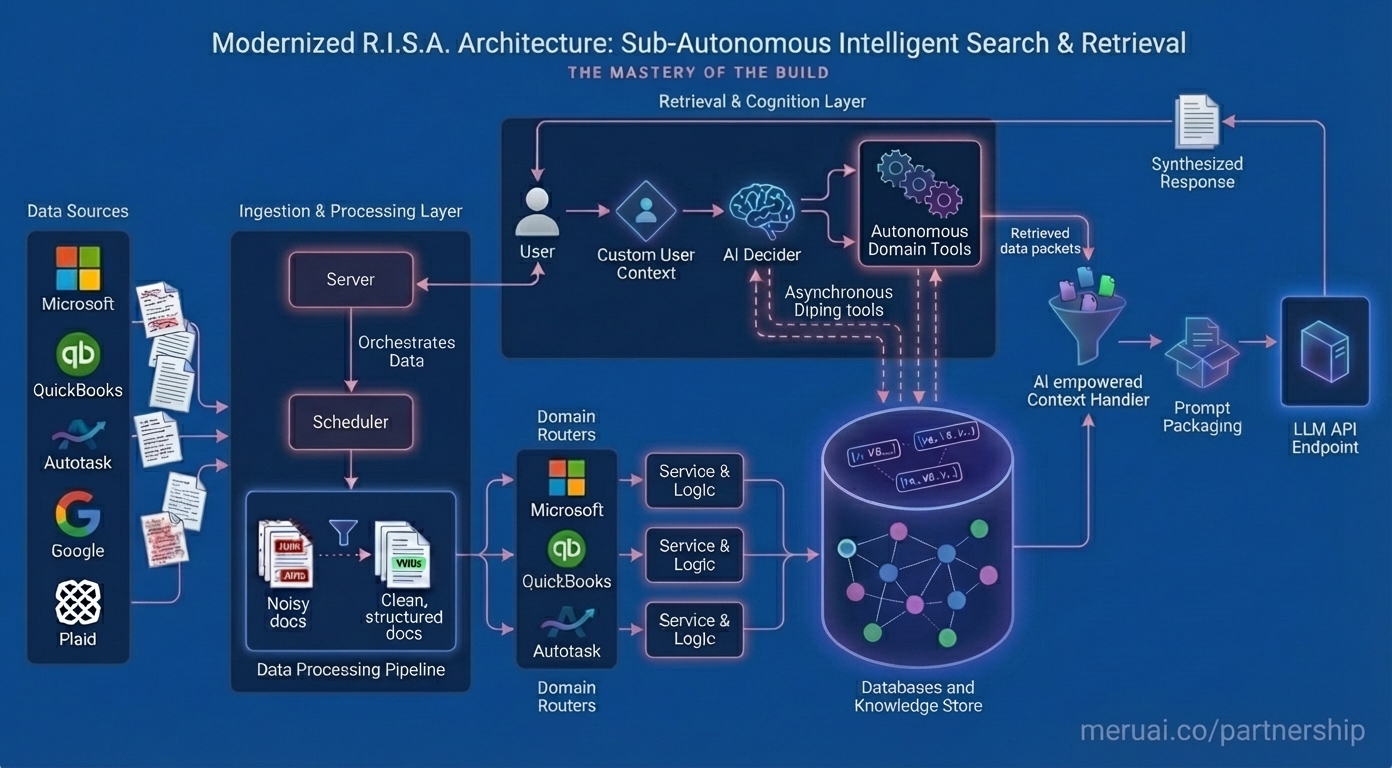
BloomChat connected ticket history, email records, CRM notes, proposal data, internal documentation, reports, and client-specific workflows into a retrieval-backed intelligence layer.

The system did not stop at generic sentiment analysis or a chat interface. It translated scattered operational data into actions, documents, reports, and recommendations that operators could use inside real business workflows.

Client-Specific Deployment

"This client needs a reporting assistant. This client needs proposal generation. This client needs account lookup. The platform gave us a way to build around the workflow instead of selling the same demo to everyone."

The platform adapted to the client environment instead of forcing a generic AI use case.

Account Intelligence

"This account has unresolved service history, prior proposal context, and a new expansion opportunity. Here is the relevant record before the executive makes the call."

The system surfaced context. The executive still owned the decision.

Technical Record

How was the account intelligence layer built?

The platform had to serve both the MSP and client implementations. It supported 150+ active internal users, roughly 10,000 daily queries, and more than 1,000 automations across onboarded client use cases.

The technical scale only mattered because it moved business work: reports could be generated, proposals could be drafted, account context could be retrieved, and executives could make decisions without waiting for manual synthesis.

RISA retrieval architecture showing account data ingestion, search, and response flow

Fig 1.0 - Retrieval and workflow intelligence architecture used for BloomChat client implementations.

Source note

Outcomes are based on anonymized implementation records from the BloomChat engagement, including implementation notes, ticket history, CRM records, proposal workflows, internal documentation, automation records, and retrieval-system logs. Client identities and sensitive account data are withheld.

Citation

How should this case study be cited?

Suggested citation

Meru AI. "BloomChat Case Study: AI-on-enterprise platform for mid-market companies." Meru AI, updated June 2026. https://meruai.co/case-study/bloomchat

What problem did BloomChat solve for the managed IT services firm?

BloomChat gave the managed services provider a repeatable AI platform it could deploy across client environments, connecting reports, proposals, account context, knowledge lookup, and automations.

How broadly was BloomChat implemented?

The provider's client network spanned 200+ potential companies across LA, Orange County, and out-of-state markets. BloomChat was deployed into onboarded client environments and supported 1,000+ automations across dozens of industries.

Did BloomChat replace executives or operators?

No. BloomChat carried context, generated drafts, and automated operational steps. Humans still owned judgment, client relationships, timing, and final decisions.

Human Return

The human return

The record carried the noise.

BloomChat proved that AI implementation in the mid-market could move beyond novelty. The platform gave executives and operators a way to turn scattered work into automations, reports, proposals, and account intelligence they could actually use.